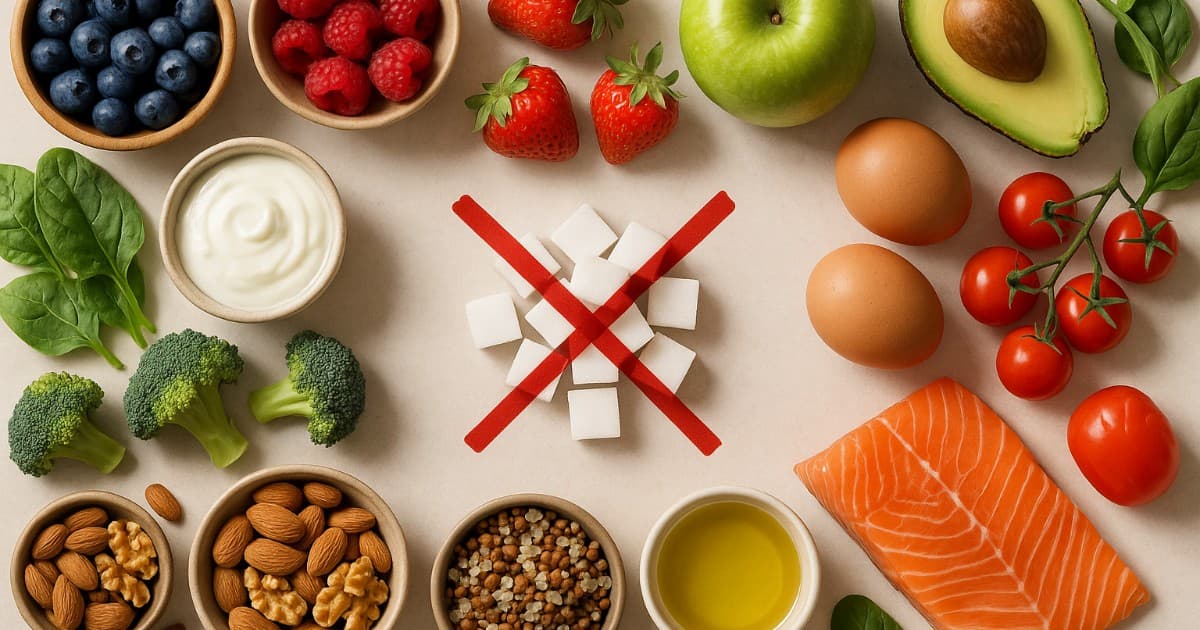
Sugar Free Diet
Written by Robert Winter · Published September 8, 2026 · Last reviewed September 8, 2026
A sugar free diet means cutting added sugar, not all sugar. This guide shows what you can eat, what to skip, and what gets better when you quit.
Quick Answer
A sugar free diet is simple at its core. You stop eating added sugars and free sugars. You keep eating whole foods that have natural sugar inside them, like fruit and milk.
Here is the short version:
| You cut | You keep |
|---|---|
| Table sugar, sweets, chocolate, cakes | Whole fruit and all vegetables |
| Soft drinks, energy drinks, cordials | Meat, fish, eggs, tofu, beans, lentils |
| Honey, maple syrup, agave | Plain yoghurt, cheese, milk |
| Fruit juice, smoothies, dried fruit | Nuts, seeds, olive oil, butter |
| Sugary cereals, granola, flavoured yoghurt | Oats, brown rice, quinoa |
| Ketchup, pasta sauce, ready meals | Water, coffee, unsweetened tea |
You do not need to count every gram. You need to learn where sugar hides and swap it for real food. Most people feel the difference in about two weeks.
What Is a Sugar Free Diet?
There are two kinds of sugar in food.
Natural sugar sits inside whole foods. The sugar in an apple comes with fibre and water. The sugar in milk comes with protein and fat. Your body handles these slowly, and they are fine on a sugar free diet.
Free sugar is sugar that has been taken out of its natural package. This means any sugar added by a cook or a food company. It also means honey, syrups, and fruit juice. Fruit juice counts because the fibre has been removed, so the sugar hits you fast (WHO, 2015).
A sugar free diet targets free sugar. You are not cutting carbs. You are not cutting fruit. You are cutting the sugar that gets added to food, and the sugar that hides in drinks, sauces, and snacks.
This is general information, not medical advice. If you have diabetes or another health condition, talk to your doctor before you change how you eat.
Why Quit Sugar? The Benefits
People who quit sugar tend to describe the same changes. Some of these have strong research behind them. Others are things people report again and again, but science has not fully pinned them down yet. We will say which is which.
Steady energy. Sugar gives you a quick lift, then a crash. Without it, many people say their energy stays level through the day. No mid-afternoon slump. No need for a snack to get through the evening.
Cravings fade. This is the one people talk about most. In the first week you might want sugar badly. After that, the pull gets weaker. Many people say they stop thinking about food all day.
Better sleep. A lot of people report falling asleep faster and sleeping deeper once sugar is gone. Less sugar late in the day may also mean fewer wake-ups at night.
A calmer mood and a clearer head. People often describe feeling less anxious and less foggy. Steadier blood sugar can mean fewer swings in how you feel.
Easier weight control. This one has solid evidence. The World Health Organization links higher free sugar intake to higher body weight, and cutting it is linked to weight loss (WHO, 2015). Sugary drinks are the biggest driver because they add calories without filling you up.
Healthier teeth. Free sugar is the main cause of tooth decay. Cutting it protects your teeth. This is well established (WHO, 2015).
Brighter skin. Many people notice their skin looks clearer after a few weeks. The research here is still thin, but it is a common report.
Food tastes better. This one surprises people. After a couple of weeks, your taste buds reset. A strawberry tastes sweet again. Plain yoghurt stops tasting sour. You need less sweetness to feel satisfied.
You do not have to believe every claim. Try it for two to four weeks and see what changes for you.
How Much Sugar Is Too Much?
Health bodies agree that most of us eat too much free sugar. Here are the limits they set.
| Who says it | The limit |
|---|---|
| World Health Organization | Under 10% of daily energy from free sugars. Under 5% is better. |
| NHS (UK) | No more than 30 g of free sugars a day for adults, about 7 sugar cubes |
| FDA (US) | Added sugars go on the label. The Daily Value is 50 g on a 2,000 calorie diet |
For most adults, 5% of energy works out to about 25 g a day, or 6 teaspoons (WHO healthy diet). One can of cola has more than that.
On a sugar free diet you aim well below these limits. But the numbers are useful. They show how far off most people are before they start.
Sugar Free Food List: What You Can Eat
Here is the good news. The list of what you can eat is long. Build your meals from these and you will not go hungry.
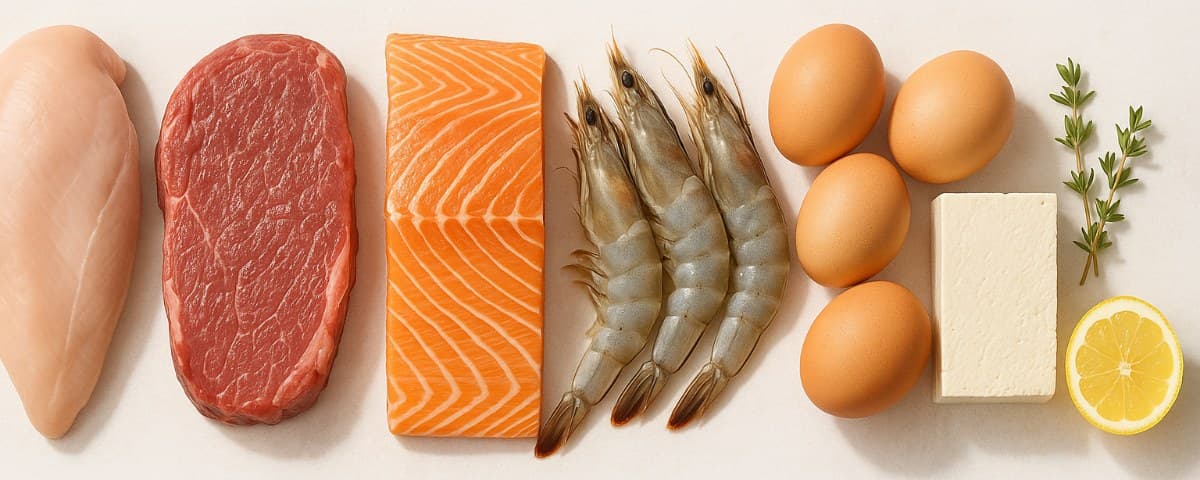
Meat, Fish, and Eggs
- All unprocessed meat and poultry: beef, lamb, pork, chicken, turkey, duck
- All fresh fish and seafood: salmon, cod, tuna, prawns, mussels
- Eggs, cooked any way you like
- Plain tofu and tempeh
Watch out for cured and processed meats like ham, bacon, and sausages. Many have sugar added. Check the label.
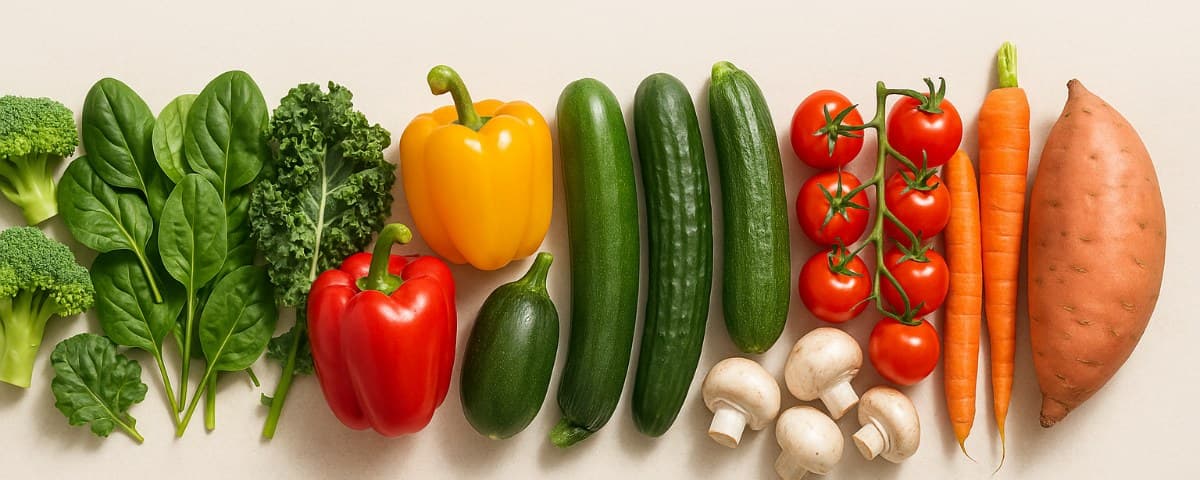
Vegetables
- All of them. Yes, all of them.
- Non-starchy vegetables are your everyday base: broccoli, spinach, kale, peppers, courgette, cucumber, tomatoes, mushrooms
- Root vegetables like carrots, beetroot, and sweet potato have more natural sweetness, but they are whole foods and they are fine
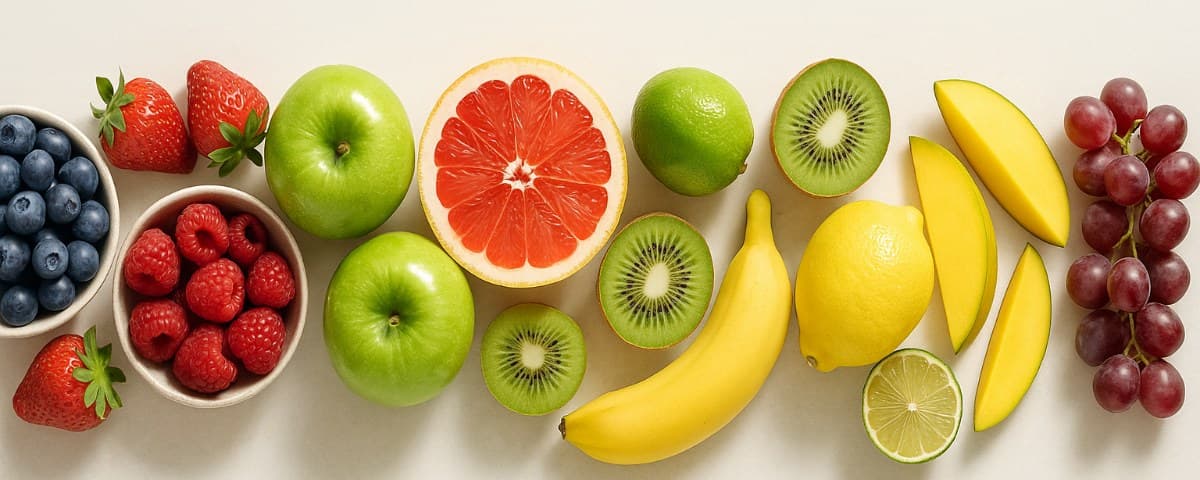
Fruit
Whole fruit stays. The sugar inside fruit comes wrapped in fibre and water, so your body handles it well.
- Lower sugar fruits: berries, green apples, grapefruit, kiwi, lemons, limes
- Higher sugar fruits: bananas, mangoes, pineapple, grapes. Still whole foods, still fine, but go easy if you are watching your intake
What leaves: fruit juice, smoothies, and dried fruit. Once fruit is juiced or dried, the sugar gets concentrated and counts as free sugar.
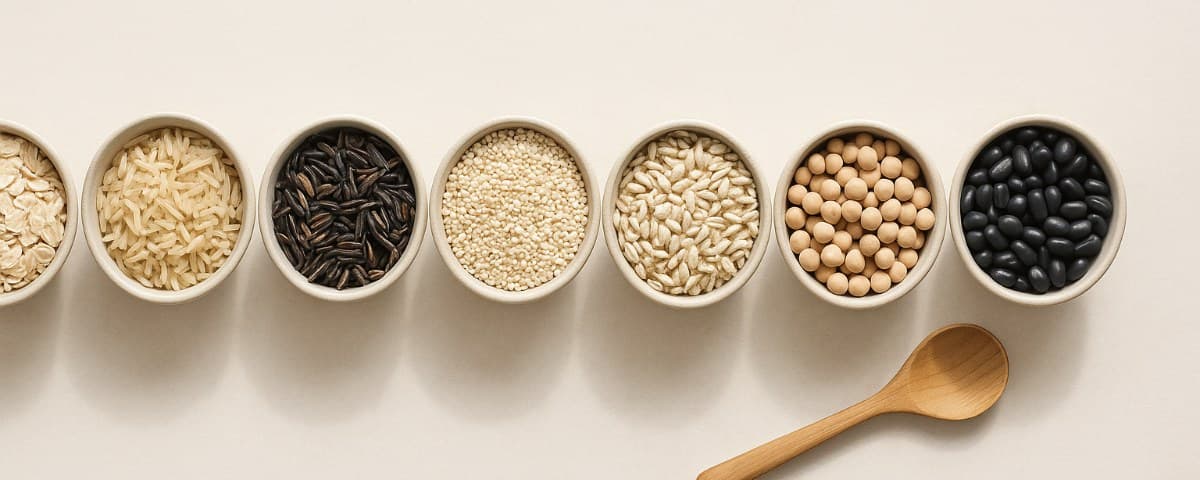
Grains and Legumes
- Plain oats
- Brown rice and wild rice
- Quinoa and barley
- Lentils in every colour
- Chickpeas and beans
Skip the flavoured versions. Instant oat sachets and most breakfast cereals are loaded with sugar.
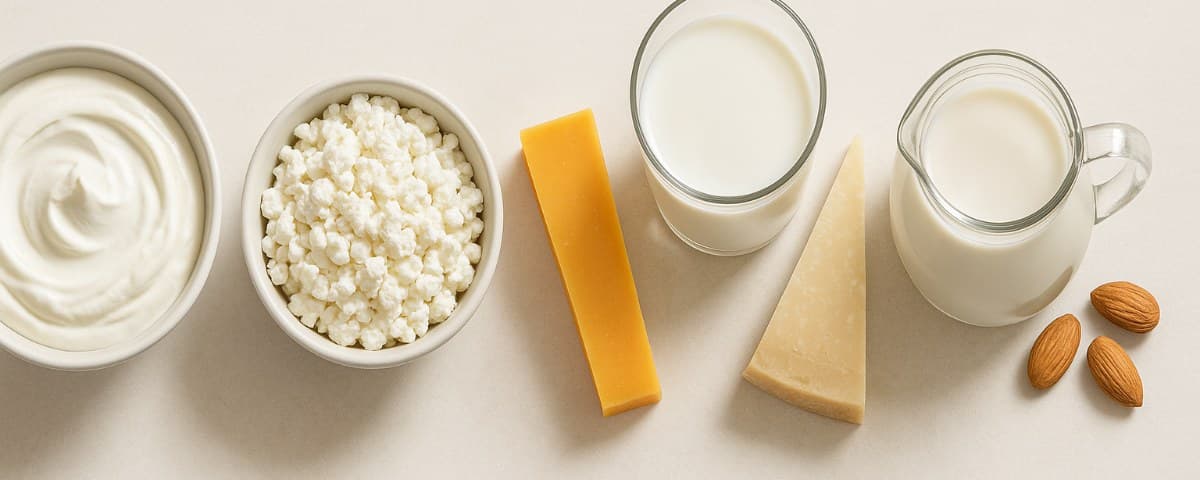
Dairy and Alternatives
- Plain yoghurt and plain Greek yoghurt
- Cottage cheese
- Hard cheeses like cheddar and parmesan
- Milk
- Unsweetened almond, coconut, and oat drinks
The key word is unsweetened. Flavoured yoghurts and sweetened plant milks can have as much sugar as a dessert.
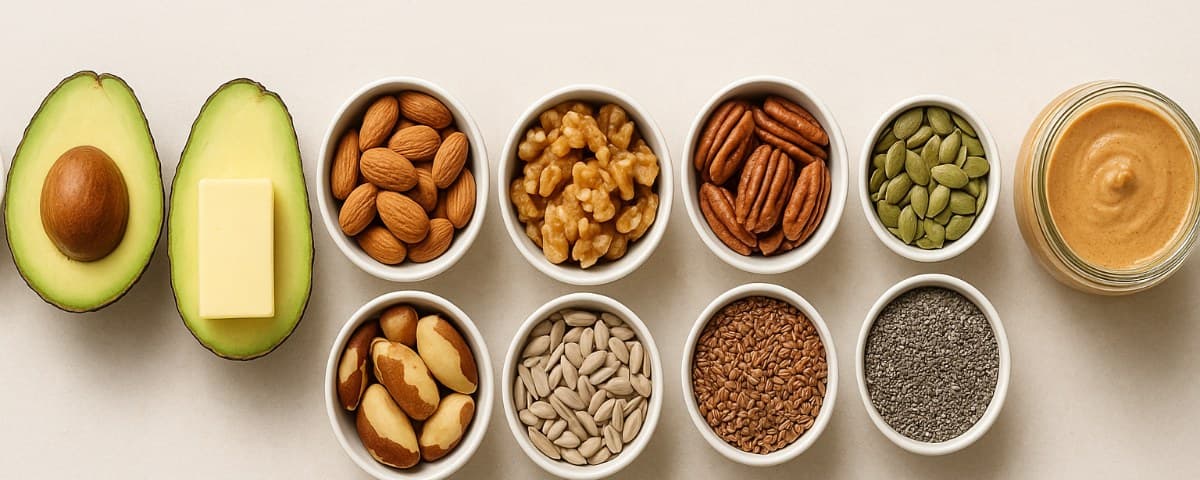
Fats, Nuts, and Seeds
- Olive oil, avocado oil, coconut oil
- Butter and ghee
- Almonds, walnuts, pecans, Brazil nuts
- Pumpkin, sunflower, flax, and chia seeds
- Nut butters, as long as the ingredients list says nuts and nothing else
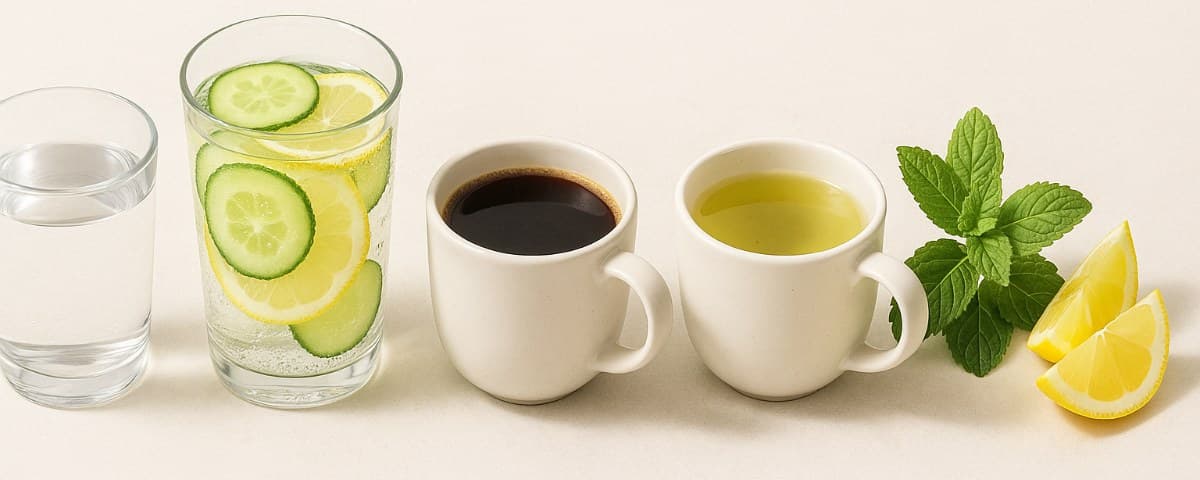
Drinks
- Water, still or sparkling
- Black coffee
- Green, black, or herbal tea, unsweetened
Add lemon, cucumber, or mint to water if plain water feels boring.
Foods to Avoid
Some of these are obvious. Some will surprise you.
The obvious ones:
- Table sugar, white or brown
- Chocolate and sweets
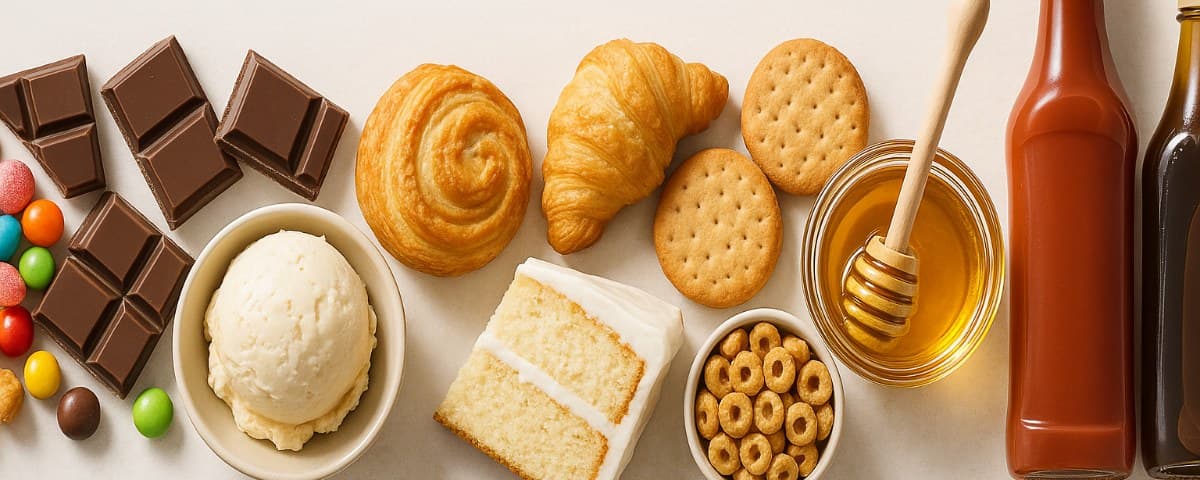
- Cakes, pastries, biscuits, and ice cream
- Soft drinks, energy drinks, and cordials
- Honey, maple syrup, and agave. These are natural, but your body treats them as free sugar
The hidden ones:
- Pasta sauces and ketchup
- Salad dressings
- Flavoured yoghurts
- Breakfast cereals and granola
- Smoothies and fruit juice
- White bread
- Ready meals and takeaways
Most hidden sugar lives in ultra-processed food. A tightly controlled study by the US National Institutes of Health found that people on an ultra-processed diet ate about 500 more calories a day than people on a matched whole food diet (Hall et al., 2019). Cutting sugar and cutting ultra-processed food tend to go together.
Hidden Sugar Names on Labels
Food companies have many names for sugar. Here is how to spot them.
Look for:
- Anything ending in ose: glucose, fructose, dextrose, maltose, sucrose
- Any syrup: corn syrup, glucose-fructose syrup, rice syrup, golden syrup
- Any nectar or juice concentrate
- Malt extract, molasses, treacle, and honey
There is a faster way. Skip the ingredients list and read the nutrition table first.
In the UK and EU, look at the of which sugars line. The NHS calls a food high in sugar if it has more than 22.5 g of total sugars per 100 g, and low if it has 5 g or less (NHS). Aim for the low end.
In the US, look at the Added Sugars line on the Nutrition Facts label. It shows added sugar in grams and as a percent of the 50 g Daily Value (FDA).
What About Sugar Free Sweets?
Sugar free chocolate and sweets do exist. They get their sweetness from sugar alcohols like maltitol and isomalt, or from plant sweeteners like stevia. These do not count as free sugars.
Two tips if you try them:
- Check the label. A true sugar free product has very close to zero on the sugars line.
- Go slow. Sugar alcohols are absorbed slowly, so a whole pack at once can upset your stomach. Treat your first pack like a high fibre food and have a few pieces at a time.
They can help you get through a craving. But they are a treat, not a food group. The goal is still to get most of your food from the list above.
How to Start a Sugar Free Diet
You do not need a big plan. Three steps get you going.
1. Clear the cupboard
Go through your kitchen with the hidden sugar names above. Read the labels on sauces, cereals, snacks, and drinks. Remove the worst offenders. If it is not in the house, you cannot eat it at 10 pm.
2. Restock with real food
Fill the gap with things you can grab fast: nuts, cheese, whole fruit, plain yoghurt, eggs, and cut vegetables. Hunger is when most people slip. Having easy food nearby fixes that.
3. Expect a flat first week
The first week can feel a bit dull. Food may taste bland. You might feel tired or grumpy. This is normal. Your taste buds are resetting. Within a couple of weeks, food starts tasting sweeter at lower doses, and cravings drop.
A few extra tips that help:
- Eat protein and fibre at every meal. They keep you full and stop cravings before they start.
- Do not skip meals. Hunger makes sugar hard to resist.
- Sleep. Short nights make you crave sugar the next day.
- Track what you eat. Seeing sugar on a screen makes it real, and makes it easier to change.
A Simple Sugar Free Day
Here is what a normal day can look like. Nothing fancy.
| Meal | What to eat |
|---|---|
| Breakfast | Plain Greek yoghurt with berries, chia seeds, and a handful of walnuts |
| Lunch | Grilled chicken salad with olive oil and lemon, plus a slice of cheese |
| Snack | An apple with almond butter |
| Dinner | Salmon, roasted sweet potato, and broccoli |
| Drinks | Water, black coffee, herbal tea |
Swap in what you like. The pattern is the point: protein, vegetables, healthy fat, and whole fruit.
Common Questions
Can I eat fruit on a sugar free diet? Yes. Whole fruit is fine. Its sugar comes with fibre and water. Juice, smoothies, and dried fruit are the ones to skip.
Is honey allowed? No. Honey is natural, but your body treats it like table sugar. The NHS counts it inside the 30 g daily limit, along with syrups.
Do I have to cut all carbs? No. This is not a keto diet. Oats, rice, quinoa, beans, and lentils are all on the list.
How long until the cravings stop? Most people say the worst is over in one to two weeks. By week three or four, sugar has lost most of its pull.
What if I slip? Nothing bad happens. Have your next meal from the list and carry on. One dessert does not undo two good weeks.
How Pureo Helps
Knowing the rules is one thing. Seeing where sugar actually shows up in your day is another.
Pureo lets you log a meal with a photo or a few words. It then scores the added sugar and ultra-processed food in that meal, alongside calories and macros. You see straight away which meals are on track and which ones are quietly adding sugar.
That is a product feature, not a medical treatment. But it turns a diet rule into something you can check in five seconds.
The Bottom Line
A sugar free diet is not about giving up everything sweet. It is about dropping added sugar, honey, syrups, juice, and the sugar hidden in packaged food. You keep fruit, vegetables, meat, fish, eggs, beans, plain dairy, nuts, and whole grains.
The first week is the hardest. After that, most people feel steadier energy, fewer cravings, and better sleep. Weight and teeth benefit too, and those have solid research behind them.
Start with your cupboard, restock with real food, and give it two weeks.
Download Pureo free on the App Store if you want to see the sugar in your meals, not only the calories.
Pureo
Download #1 Calorie tracking app
Pureo helps you to track your calories, quit sugar & ultra processed food, and reach your goals.


Primary sources
Health facts on this page are tied to these public-health and peer-reviewed sources. Product notes about Pureo are our own.
- Guideline: sugars intake for adults and children — World Health Organization
- Healthy diet fact sheet — World Health Organization
- Sugar: the facts — National Health Service (UK)
- Added Sugars on the Nutrition Facts Label — U.S. Food and Drug Administration
- Ultra-processed diets cause excess calorie intake and weight gain — Cell Metabolism (2019)
- Ultra-processed foods, diet quality, and health using the NOVA classification system — Food and Agriculture Organization of the United Nations
How Pureo tests this
This is a practical guide, not a clinical trial. The sugar limits and label rules come from WHO, NHS, and FDA guidance. The food list follows common sugar free eating advice. In the benefits section we separate what published research supports from what people commonly report. We did not run our own study.
Read our editorial standards